July 16, 2021

Erle Stanley Gardner

Tomorrow is the birthday of Erle Stanley Gardner, author of the Perry Mason novels.  Born in 1889, Gardner studied law on his own after high school and passed the bar in California in 1911. He worked off and on as an attorney until 1933 when his first Mason book The Case of the Velvet Claws was published. The rest, as they say, is history.

His writing career began in 1923 when he had his first story published in a pulp fiction magazine. He wrote stories for many of these magazines, setting for himself a goal of 1,200,000 words per year. These were written in his spare time, mind you. He then began to write different series of books involving mystery and the law, using seven pseudonyms. The eighty Perry Mason novels were published under his own name.

Radio gave Perry Mason a voice, that of John Larkin. When producers wanted to bring Mason to television as a soap opera, Gardner refused, so they thinly disguised him and gave him the name Mike Karr, played by John Larkin, on the soap The Edge of Night. When Perry Mason came to television in 1957, he was portrayed by Raymond Burr. (John Larkin appeared several times on the show as unrelated characters.) The show was successful, running for nine seasons, with Gardner appearing as a judge in the final episode.

We have a number of the Perry Mason books (maybe 25 or so, nothing near 80). Are they great literature? No, but they are fun and entertaining. Just how does he win every time and how does D.A. Hamilton Burger keep his job, losing to Perry every time? As for the tv show, we have all nine seasons. It’s my favorite tv show and I watch one every weekday with my morning coffee (watching another one Friday nights when we can stay up later). 

By 1937 Gardner moved to a ranch in Temecula California, living and writing there until his death in 1970 (just five days after the death of William Hopper who played detective Paul Drake for the entire run of the tv show). Proving how popular Perry Mason was, CBS produced 30 movies from 1985 to 1995. Raymond Burr had died in 1993, so the last two years were done with lawyers other than Mason. Barbara Hale who played Della Street in the original series was also in these films with her real-life son William Katt playing Paul Drake, Jr. in the first nine movies. Is that enough coincidence?

Gardner founded The Court of Last Resort in the 1940s. Quoting Wikipedia, The Court was “an organization that was dedicated to helping people who were imprisoned unfairly or couldn’t get a fair trial.” Over the years he spent thousands of hours, along with friends in the legal and forensic fields, researching and helping people get the legal help they needed to rectify injustices. He wrote a book about this in 1952, which was then made into a tv series of the same name. How does one person have the time and talent to write so many books and help so many people? I don’t know, but I wish we could bottle it.

July 14, 2021

Mid-Summer Memories

Many, many – many – years ago I read this poem and liked it so well that I remember it to this day. The poet used words in such a way that you could feel the summer heat, smell and taste the juicy fruit and long for the times when you could be free to do whatever you pleased. Ah, summer when you were a kid. The poet says “The summer which never maybe was” but I remember them vividly: walking the block to the beach with the hot sand and cold ocean, sitting in a lawn chair listening to my favorite AM station singing along to all the songs, riding my bike anywhere and everywhere, trips to the library. Adult vacations can’t come anywhere near the pleasure of being alive and out of school in summers of childhood.

I hope this poem by John Tobias will bring you pleasant memories. Enjoy!


Reflections on a Gift of Watermelon Pickle Received from a Friend Called Felicity

During that summer

When unicorns were still possible;

When the purpose of knees

Was to be skinned,

When shiny horse chestnuts

(hollowed out

Fitted with straws

Crammed with tobacco

Stolen from butts in family ashtrays)

Were puffed in green lizard silence

While straddling thick branches

Far above and away

From the softening effects of civilization;


During that summer-

Which may never have been at all;

But which has become more real

Than the one that was-

Watermelons ruled.


Thick pink imperial slices

Melting frigidly on sun-parched tongues

Dribbling from chins;

Leaving the best part,

The black bullet seeds,

To be spit out in rapid fire

Against the wall

Against the wind

Against each other;


And when the ammunition was spent,

There was always another bite:

It was a summer of limitless bites,

Of hungers quickly felt

And quickly forgotten

With the next careless gorging.


The bites are fewer now.

Each one is savored lingeringly,

Swallowed reluctantly.


But in a jar put up by Felicity,

The summer which never maybe was

Has been captured and preserved.

And when we unscrew the lid

And slice off a piece

And let it linger on our tongue:

Unicorns become possible again.


July 12, 2021

The Elements of Style

One of my favorite books is The Elements of Style. Yes, it’s a grammar and writing reference book, but I love it. It has been one of my best friends over the years. It’s useful, easy to read, and it helps to prevent me from looking like an idiot. If I do, it’s my fault, not that of Strunk and White.

William Strunk Jr. (1 July 1869 – 26 September 1946) wrote his “little book” in 1918 for his students at Cornell University and it was published by Harcourt in 1920. E. B. White (11 July 1899 – 1 October 1985), one of Strunk’s students, was asked by Macmillan and Company to revise and update the book in 1959. Millions of copies have been sold over the years.

White also produced a second edition in 1972 and a third in 1979, the one that I have. I prefer not to use the later ones as they start to get into politically correct gender usage. Whether it’s the Bible or a grammar book, I understand that the word “man” includes men and women in most cases. Your mileage may vary.

Among my favorite sections are uses of apostrophes (how many times have I been tempted to change a sign on a street or in a store that uses an apostrophe incorrectly in a word that is plural, not possessive), “Words and Expressions Commonly Misused,” and the advice to keep the adjectives and adverbs to a minimum.

Am I sounding like a geek yet?

In addition to this gem of a book, E. B. White was famous as an essayist, short story writer, and writer of novels for children, such as Charlotte’s Web, Stuart Little, and The Trumpet of the Swan

White says, “Writing good standard English is no cinch.” Ain’t that the truth. But this book makes it easier.

July 09, 2021

Shakespeare's Sonnets: XI

Wisdom and beauty are called on by nature to produce more like them. They are “her seal” and she wants the young man to “print more” like himself. Otherwise, “folly, age, and cold” result. 


Sonnet XI

As fast as thou shalt wane, so fast thou grow’st

In one of thine, from that which thou departest;

And that fresh blood which youngly thou bestow’st,

Thou mayst call thine when thou from youth convertest.

Herein lives wisdom, beauty, and increase;

Without this folly, age, and cold decay:

If all were minded so, the times should cease

And threescore year would make the world away.

Let those whom nature hath not made for store,

Harsh, featureless, and rude, barrenly perish:

Look whom she best endowed, she gave the more;

Which bounteous gift thou shouldst in bounty cherish:

                She carved thee for her seal, and meant thereby,

                Thou shouldst print more, not let that copy die.


July 07, 2021

Happy Birthday Gustav Mahler

Composer Gustav Mahler was born this date in 1860. 

Oh no, you’re not going to write about that incredibly depressing guy who wrote about dead kids, are you? Well, yeah, but give him a chance. There’s a lot more to him than songs about death. He wrote about all aspects of life, the happy as well as sorrowful, and death is a part of life.

As with most people, Mahler experienced his share of love and his share of loss. And, being incredibly talented, he expressed his feelings through his music, touching people deeply. Growing up in Christian Bohemia, but being Jewish and speaking German, Mahler felt out of step from the beginning. He had to battle antisemitism almost his whole career, even having to “convert” to Catholicism to get the post of director of the Vienna Hofoper. He primarily made his reputation as a conductor, working all over Germany and Austria, and even conducting the Metropolitan Opera and New York Philharmonic. During summers, the off-season, he did most of his composing.

Most of his composing was confined to songs and symphonies. While conducting hundreds of operas in his career, the only opera he co-wrote was Die drei Pintos (the three pintos). This was an unfinished opera by Carl Maria von Weber and Mahler completed the sketches and orchestration.

Many of his compositions incorporated folk songs he heard in the streets as a child. He also discovered the German folk poems Des Knaben Wunderhorn (The Youth’s Magic Horn) and spent a dozen years setting these to music. The knock against him being depressing came from the symphonies and the song cycle Kindertotenlieder (Songs on the death of children). The poems are by Friedrich Rueckert, not Mahler.

However, depressing is in the eye of the beholder, and I find most of his music uplifting. The example I’ve chosen for your listening pleasure is the Finale of the 8th Symphony. Although this was billed as “the Symphony of a Thousand,” Mahler never approved of this title, but the orchestra and chorus is quite large. The work is split into two parts. The text of the first is the 9th century hymn veni creator spiritus and the second is the last part of Goethe’s poem Faust. The theme is redemption through love. The bit you’ll hear starts out so quietly you can barely hear it, but ends on a triumphal note that makes you think you’re walking through the Gate of Heaven. Nothing depressing about this.

Oh, and the performance is Sir Simon Rattle with the National Youth Orchestra of Great Britain. Yep, those are kids in that orchestra making that glorious sound. Enjoy!

P.S. forgive the ads and the subtitles.


July 05, 2021

Happy Birthday Mr. Calvin and Hobbes

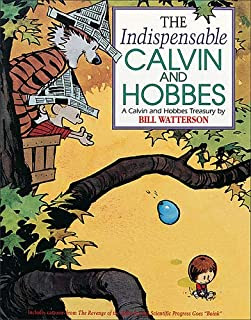
Who is Bill Watterson you may ask? Only one of the most famous and talented cartoonists to have graced the comics page in your newspaper from 1985 to 1995. The creator of Calvin and Hobbes was born this day in 1958. 

Calvin is a 6-year old boy with a stuffed tiger named Hobbes who comes to life when Calvin is alone. One could not call Hobbes Calvin’s alter ego because he has a distinct personality that doesn’t just do what Calvin wants. The pair are best friends who occasionally get into fights and often get into a lot of trouble. In a creative view from above, Calvin and Hobbes up in a tree are about to throw water balloons on an unsuspecting Susie below. The pair make decapitated snowmen lying about the yard. They put themselves in danger trying to fly by careering down a hill in a wagon with an umbrella.

I admire Watterson for fighting for the right to do Calvin and Hobbes as he wanted. He drew it to satisfy himself and because it made his wife laugh. It satisfied a lot of us too, being one of the funniest cartoon strips ever. I also admired his determination not to cheapen it with a lot of merchandising. If you have a shirt or cap or figurine, it’s a stolen image. We’re content with the books of the daily and Sunday strips – we have them all. And they still make us laugh every time we look at them.

Here are covers of some of the books. Pick one up and enjoy the absurd world of Calvin and Hobbes.


July 02, 2021

Happy Birthday to Nathaniel Hawthorne and the country!

An American author born on the Fourth of July. What could be better for this holiday weekend?

Nathaniel Hawthorne (4 July 1804 – 19 May 1864) was born in Salem, Massachusetts as Nathaniel Hathorne and one of his ancestors was a judge during the Salem Witch Trials, known for his harshness in questioning the accused. Hawthorne added the “w” to his name, possibly to distance himself from this ancestor. After his father died in 1808 the family moved to Raymond, Maine, to be near his mother’s family. He attended Bowdoin College beginning in 1821, graduating in 1825. There he met future president Franklin Pierce and poet Henry Wadsworth Longfellow.

Hawthorne contributed stories to many publications and his college friend Horatio Bridge financially helped him publish a collection in 1837 called Twice Told Tales. In 1839 he accepted a position at the Boston Custom House. He married Sophia Peabody in 1842 and they had 3 children. They first lived in The Old Manse in Concord and here he wrote stories published as Mosses from an Old Manse. His first novel The Scarlet Letter was published in 1850.

The family moved to Lenox and there Hawthorne met Herman Melville, with whom he became good friends. While in the Berkshires he wrote The House of Seven Gables. He also published more stories and another novel The Blithedale Romance. During the Pierce administration Hawthorne was appointed U.S. Consul in Liverpool. After his tenure there the family toured Europe and returned to the U.S. in 1860. He published his last novel The Marble Faun that year. Several other novels were unfinished at his death in 1864.

The portrait of Hawthorne as a young man (above) hangs in the Peabody Essex Museum in Salem. One of the nice things about growing up in Maine was its proximity to Massachusetts and all the historic sites there. I was able to not only visit the Peabody, but saw Hawthorne’s birthplace, the House of Seven Gables, the Witch House (all in Salem), and his home in Lenox (near Tanglewood). I’ve read most of Hawthorne’s novels and stories and seeing all these places brings them to life. How fortunate America is to have produced this man of letters.  

Goodbye...for now

I began this blog on November 16, 2020, and now comes the time to bring it to an end. Or at least put it on hiatus. November 16, 2021, is th...