August 30, 2021

Ponchielli: Dance of the Hours

You may not be familiar with the name Amilcare Ponchielli (31 August 1834 – 16 January 1886). Even if you are an opera fan, you may only be familiar with his most famous work – La Gioconda. This was adapted from a play by Victor Hugo by the librettist Arrigo Boito (Mefistofele).

It was thought, back in the day, that operas needed to have a ballet and the ballet (“Dance of the Hours” – morning, day, evening) came at the end of the third act of La Gioconda. It’s probably the best known piece of the opera. The first video is the ballet in all its 9+-minute glory.

Ah, but it doesn’t end there. In 1940 Walt Disney used it in the famous animated film Fantasia, replete with dancing ostriches, hippos, elephants, and alligators. Spike Jones used part of it in 1949 for the backdrop of Doodles Weaver “calling” the Indianapolis 500. And best of all Allen Sherman wrote the parody “Hello Muddah, Hello Faddah.” Videos two and three are Spike Jones and Allen Sherman, respectively. 

Whether it’s Disney or Bugs Bunny or a variety of other singers and songwriters, classical music has provided interpreters with beautiful ballads and hilarious humor and introduced people to the great composers who came up with the tunes. We can appreciate all the different forms that the music takes.


August 27, 2021

St. Monica - a Mother's Love

What’s a Christian mother to do when her son lives a profligate life, has children out of wedlock, is lazy, and holds heretical religious views. Pray, pray, and pray some more.

Monica’s two younger children entered the religious life, but her oldest son Augustine was a problem. His book Confessions describes in detail how he misspent his youth and how he resisted his mother’s urgings to repent and convert. Convert he did and became one of the great leaders of the early Church. This in part must be because his mother stormed the gates of Heaven with her prayers and pleas. She was nothing if not persistent and patient.

Monica was born in what is now Algeria in 332 A.D. and at a young age was married to a pagan named Patricius who was a Roman official in her hometown. Monica was a Christian from birth and her piety and good works annoyed Patricius and his mother who lived with them. However, violent as his temper was, he respected Monica and did not physically abuse her. He did often commit adultery and this caused Monica great pain. They had three children who survived infancy. Patricius refused to let Monica have them baptized. He finally agreed when Augustine fell ill, but then changed his mind when the boy recovered. Augustine was 17 and studying rhetoric in Carthage when his father died. Fortunately, with her patience and prayers, Monica had convinced Patricius and her cantankerous mother-in-law to convert a year before he died.

When Augustine returned home his relationship with his mother was strained because he had taken up Manichaeism (a heresy that all flesh is evil). However, she had a vision that he would live to return to the faith and thus she reconciled with him and prayed and fasted for him. At age 29 Augustine decided to go to Rome to teach rhetoric. Monica wanted to go, but Augustine eluded her and took off without her. She followed but by the time she reached Rome, she discovered he had departed for Milan. She caught up with him there. 

In Milan Augustine met the bishop Ambrose. He began to take instruction from him and at Easter 387 Augustine was finally baptized. As he and Monica were travelling to Africa, she became ill and died. She was buried at Ostia, but in 1430 Pope Martin V ordered that her relics be brought to Rome and deposited in a chapel at the Basilica di Sant’Agostino (Saint Augustine). 

St. Monica’s feast day is August 27, with her son’s feast day the next day. Not surprisingly, St. Monica is the patron saint of conversion, wives and mothers. Her prayers for her son brought us one of the Church’s greatest saints, proving once again that God listens and can bring the best out of terrible situations. St. Monica, pray for us.

August 25, 2021

Leonard Bernstein, Teacher Extraordinaire

Leonard Bernstein (25 August 1918 – 14 October 1990) was many things: pianist, conductor, composer, champion of other American composers, mentor, philanthropist, author, and, most importantly in my opinion, educator. As impressive as all his other roles and accomplishments were, he influenced a whole generation of children and taught them how to appreciate – to love – music.

His first television lecture on classical music was in 1954 on the arts and humanities program Omnibus (hosted by Alastair Cooke). Using the Symphony of the Air to demonstrate musical passages Bernstein discussed Beethoven’s Fifth Symphony. This was the first of ten lectures on various aspects of music such as jazz, modern music, and the art of conducting. We are fortunate to have these in our DVD library.

Two weeks after being named Music Director for the New York Philharmonic in 1958 Bernstein conducted his first Young People’s Concert. He would conduct 53 concerts over the course of fourteen years, even after he stepped down as Music Director. The programs were based on music the Philharmonic would be performing that season, with Bernstein writing the scripts for the shows. His ability to explain complex musical concepts while never dumbing-down the information made these shows as interesting for adults as they were for children. There is a DVD/Blu-ray set of 52 concerts now available. (On our DVD wish list.)

In 1972 Bernstein became the Norton Professor of Poetry at Harvard University (his alma mater). Part of the requirement was that he deliver six public lectures, which he did in the fall of 1973. The lecture was given live and then it was recreated in the studio for release to television (in 1976). These are also on DVD (which we have). Although sometimes I can’t remember what I had for dinner last night, I clearly remember that in 1978 I had to work on a Saturday to help catch up on some work at the insurance company where I was employed and I was fortunate enough to hear one of these lectures being broadcast on our local classical radio station. I was staggered at the high level of the subject matter being presented and the fact that I could understand it. That was due much more to Maestro Bernstein’s talent than my abilities.

Here is a 12 minute clip of a Young People’s Concert from 1964 entitled “What Is Melody?” The whole program is also on YouTube, as are many other shows. Try them out. You’ll be entertained as well educated.


August 23, 2021

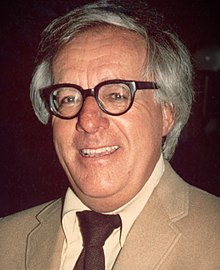
Ray Bradbury - Happy 101!

Yesterday would have been Ray Bradbury’s 101st birthday. It somehow would have been appropriate for one of the masters of fantasy had he made it that long. Alas, he died nine years ago (22 August 1920 – 5 June 2012).

Often called a science fiction writer, Bradbury rather thought of himself as a writer of fantasy. He said, “First of all, I don’t write science fiction. I’ve only done one science fiction book and that’s Fahrenheit 451, based on reality. Science fiction is a depiction of the real. Fantasy is a depiction of the unreal. So Martian Chronicles is not science fiction, it’s fantasy. It couldn’t happen, you see? That’s the reason it’s going to be around a long time – because it’s a Greek myth, and myths have staying power.”

Bradbury wrote novels, short stories (over 600), plays, and film scripts. Many of his short stories were adapted for radio and television, including Suspense, Lights Out, CBS Television Workshop, Alfred Hitchcock Presents, and Twilight Zone. He was the host of The Ray Bradbury Theater, which adapted 65 of his stories. He even wrote plays and acted in them in a number of different theater companies.

How did he have such a huge output? From a young age he wrote every day. Every day. He read every day too. He once said that “Libraries raised me.” Not having the money to go to college during the Depression he spent three days a week at the library for ten years. He read everything from science fiction to classic novels to poetry. This may be where he developed his lyrical style.

One of my favorite Bradbury books is Fahrenheit 451, a story of a world where media is all-invasive, individual thought is crushed, and books are burned as subversive. It’s as relevant now as it was when it was written in 1953. In a 1994 interview Bradbury was asked how the story holds up. He answered, “It works even better because we have political correctness now. Political correctness is the real enemy these days…It’s thought control and freedom of speech control.”

Like Edgar Allan Poe and Raymond Chandler, Ray Bradbury transcends a particular genre. They are just good writers. To be educated, or to become a good writer, read good writers of many genres. This will teach you more than any writing or literature class can. In our own library we have copies of Bradbury’s Fahrenheit 451, The Martian Chronicles, I Sing the Body Electric, The October Country, The Illustrated Man, and The Machineries of Joy. Until we find more in our used book hunts.

August 20, 2021

Shakespeare's Sonnets: XIII

None of us can control completely the length of our lives or what will happen in them. The poet seems to be urging us (especially the young man from previous sonnets) to make hay while the sun shines. Again, he suggests marriage and family as a way of carrying on. The young man had a father, let his son say the same thing.


Sonnet XIII

O! that you were yourself; but, love, you are

No longer yours, than you yourself here live:

Against this coming end you should prepare,

And your sweet semblance to some other give:

So should that beauty which you hold in lease

Find no determination; then you were

Yourself again, after yourself’s decease,

When your sweet issue your sweet form should bear.

Who lets so fair a house fall to decay,

Which husbandry in honour might uphold,

Against the stormy gusts of winter’s day

And barren rage of death’s eternal cold?

                O! none but unthrifts. Dear my love, you know,

                You had a father: let your son say so.


August 18, 2021

The Scarlett Letter

Nathaniel Hawthorne had his own post on his birthday, July 4. Now we look closer at his first published book The Scarlett Letter. I first read the book years and years ago and, finding it in a thrift store recently, thought it was time to read it again. 

The story brings together a disgraced woman, her lover and father of her child, and her husband.  Hester Prynne has recently given birth to a daughter Pearl and is forced to stand on the gallows for three hours to accept the scorn and contempt of her goodly Puritan neighbors. She is also condemned for the rest of her life to be shunned and to wear a scarlet “A” on her breast. She refuses to reveal who her lover was and he, a much-beloved clergyman, is unwilling to reveal himself, fearing the loss of his position and the admiration of his congregation. Thought dead in a shipwreck, her husband has changed his name and has taken up medicine. He treats the child and warns Hester not to reveal who he is or he will discover the name of her lover and ruin him.

While Hester accepts her restrictions in society because of her sin and lives in a small cottage making a living with her needlework, Dimmesdale the clergyman and Chillingworth the doctor rent rooms in the same house so that the doctor can look after his “patient”, who is already exhibiting physical symptoms because of the guilt he carries. Because of the revenge Chillingworth is consumed with, he too begins to fail physically and mentally. Hester, seeing what is happening to the men, finally decides to tell Dimmesdale who Chillingworth is and to be careful of him. She convinces Dimmesdale that they should leave Salem and go away together where they can live a free life with their daughter. She books passage on a ship but subsequently discovers Chillingworth has found them out and is also going.

Reverend Dimmesdale delivers a speech at the Election Day festivities but as the participants are leaving the meeting house, Dimmesdale, barely able to walk, sees Hester on the scaffold and goes to her, collapsing in her arms. He reveals that he has been carrying the “A” on himself too. He acknowledges Pearl and Hester and then dies.

The three characters all keep secrets and refuse to confess their sins. All this time, Hester has borne the shame of wearing the “A” and has worked to help the poor and sick in the town, thinking of this as penance. She has been alienated from society and from God and has convinced herself that her earthly sins will not keep her – or Dimmesdale – from getting to Heaven. Forgiveness can be gained, not from oneself, but from God, but there first has to be true contrition. 

August 16, 2021

Assumption of the Blessed Virgin Mary

Yesterday was the feast of the Assumption of the Blessed Virgin Mary. It is so important in the Catholic Church that it is a Holy Day of Obligation when it falls on any day other than Sunday. 

The assumption means that when the Blessed Virgin’s life on earth was finished, she was taken up into Heaven body and soul. Did she actually die? Well, we’re not completely sure. Death as we experience it can be painful and possibly sudden, a consequence of original sin, not to mention our own sins. Since Mary was born without sin (Immaculate Conception) and without the stain of original sin, would she have merited death? Jesus certainly experienced physical death. Why wouldn’t His mother, albeit more peacefully? Some say that the Apostles witnessed her “falling asleep” and assumption, although there is no mention of it in the Bible. In fact, after Jesus from the Cross puts her in the care of St. John, the only other mention of her is being with the Apostles on Pentecost. We rely on Tradition and history to glean any other clues.

Pope Pius XII declared in 1950 the dogma that the Blessed Virgin, “having completed the course of her earthly life, was assumed body and soul into heavenly glory.” This says nothing about how and if she died, just that her life was complete. One thing that I’ve noted is that any time a martyr or a revered Christian died back in the day, others would try to gather everything possible from the person, a lock of hair, a piece of clothing, a fragment of bone. These relics are in Churches throughout the world and are venerated as reminders of what a saintly life will bring us to. No first-class relics of the Blessed Virgin exist, except for some locks of hair, since she was assumed into Heaven body and soul. (Garments are extant.)

Why should we believe in the Assumption? Just because a Pope declared it dogma? Where’s the proof, the evidence? My proof is faith. Faith in Jesus. He loved His mother so much that He provided that she would be born and live a life without sin. Why would He make her see corruption or experience Purgatory? She had nothing to atone for. She was ready for Heaven her whole life. What a welcome that must have been. Blessed Virgin Mary, pray for us. 

Goodbye...for now

I began this blog on November 16, 2020, and now comes the time to bring it to an end. Or at least put it on hiatus. November 16, 2021, is th...